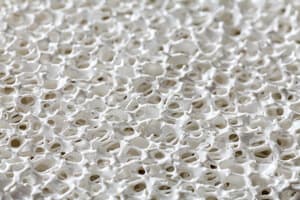

PHOTOCATALYTIC GROWING BENEFITS



Traditional indoor cultivation is energetically inefficient by design
The systemic problem of conventional indoor cultivation
The classic indoor cultivation model is based on permanent negative pressure: continuous air extraction to control odor, temperature, and humidity.
- - Constant loss of conditioned air.
- - Expulsion of CO₂ useful for photosynthesis.
- - Continuous MASSIVE intake of spores, dust, and external contaminants.
- - Structural dependence on carbon filters.
- - Recurring replacement costs.
- - High energy consumption.
It is not an isolated flaw. It is an environmental architecture that can be optimized from its foundation.
Environmental technology without oxidant emission into the air
Photocatalysis is an environmental technology. But here something fundamental occurs: it does not release oxidants into the air.
UV-A activation of titanium dioxide (TiO₂) generates highly reactive hydroxyl radicals (•OH). The key is not the “strength” of the reaction. It is where it occurs.
The radicals are generated and remain on the photocatalytic surface. They do not enter the environment. They do not accumulate in the air. They do not circulate within the breathable volume.
They react only when a contaminant molecule comes into contact with the surface. After the reaction, the active site regenerates instantly under UV-A irradiation.
- - Controlled and confined oxidation.
- - No environmental emission of oxidants.
- - Protection of plant health.
- - Protection of people.
- - Preservation of organoleptic qualities.
🔬 Scale and proportion (non-technical explanation)
Imagine a towel the size of a football field...
Now think about different amounts of water on it:
- - Four drops of sweat.
- - A spilled bottle.
- - A barrel.
- - An entire container.
Even at elevated concentrations (1000 ppm), contaminants represent only about 0.1% of the volume. That is much closer to a few drops on an enormous surface than to a barrel or a full container.
An activated photocatalytic surface can present on the order of 10²⁰ reactive sites per square meter.
The reaction does not occur in the air. It occurs on the surface.
The system operates under a regime of massive excess reactive surface relative to the contaminants present.
The detailed quantitative explanation is developed in the Technical Document.
Global ENERGY efficiency optimization
Redesigning environmental airflow
By treating the air within the cultivation volume itself:
- The need for constant air extraction is reduced.
- Thermal retention is improved.
- CO₂ residence time is optimized.
- Structural dependence on activated carbon is decreased.
- Energy and maintenance costs are reduced.
The oxidation of organic compounds generates CO₂ as a byproduct, indirectly contributing to the carbon balance when the system is properly dimensioned.
Lighting and energy coherence
Synergy between LED lighting and the photocatalytic system
Traditional sodium lamps generate a high thermal load, requiring higher extraction rates.
The transition to LED:
- Reduces thermal emissions.
- Stabilizes the microclimate.
- Allows operation with lower forced air renewal.
- Increases air contact time with active surfaces.
System design must always be evaluated considering climatic conditions and geographical location.
Beyond odor elimination
Additional benefits of the photocatalytic coating
In addition to effective odor reduction:
- Absorbs UV-A for activation and reflects the visible spectrum, improving lighting efficiency.
- Acts as a diffusive surface in shaded areas.
- Exhibits self-cleaning capacity through oxidation of deposited organic matter.
- Reduces biofilm formation and dust accumulation.
- Decreases maintenance requirements.
A new environmental control model for indoor cultivation
From filter to integrated system
It is not about adding another device.
It is about rethinking the environmental architecture of cultivation.
Moving from exclusive dependence on filtration and extraction, to integrating surface treatment, energy efficiency, and airflow redesign.
Downloadable Technical Document
Complete scientific foundation and technological comparison
This project is accompanied by a Technical Document that develops in depth:
- - Physicochemical foundations of heterogeneous photocatalysis.
- - Molecular scale and surface kinetics.
- - Environmental modeling applied to indoor cultivation.
- - Comparative energy efficiency analysis.
- - Applications in drying and preservation.
- - Documented experimental observations.
It also includes a detailed comparison of all existing odor elimination technologies applied to indoor cultivation, including:
- - Carbon filters.
- - Ozone.
- - Ionization.
- - Cold plasma.
- - Photocatalysis.
The objective of the document is not promotional. It is technical.
It constitutes a rigorous argumentative foundation signed by a Senior Technician in Chemistry and Environmental Health, positioning the project as a substantiated, structured, and scientifically reasoned proposal.
Structure of the Technical Document
1. Introduction
Context, indoor cultivation challenges, and objectives of the environmental redesign.
2. Physicochemical Foundations of Heterogeneous Photocatalysis
UV-A activation mechanism, surface OH radical generation, and confined oxidation dynamics.
3. Molecular Scale and Proportional Relationships
Quantitative analysis: 10²⁰ reactive sites versus contaminant concentrations in the ppm range. Modeling of surface-excess regime.
4. Environmental Architecture of Conventional Indoor Cultivation
Negative pressure, continuous extraction, and associated energy and health implications.
5. Environmental Redesign Through Photocatalysis
Integration within the cultivation volume and airflow optimization.
6. Technological Comparison in Odor Elimination
Technical analysis of carbon filters, ozone, ionization, cold plasma, and photocatalysis. Advantages, limitations, and operating conditions of each technology.
7. Plant Health, Environmental Safety, and Organoleptic Properties
Surface oxidation vs. environmental emission. Impact on plants, people, and organoleptic qualities.
8. Lighting and Energy Synergy
Interaction with LED systems and overall thermal coherence.
9. Complementary Applications
Reduction of biofilm formation, dust accumulation, and maintenance needs.
10. Limitations, Technical Considerations, and Best Practices
Design conditions, system dimensioning, and non-recommended scenarios.
11. Technical Conclusions
12. Technical Appendices
Calculations, scientific references, and methodological notes.